
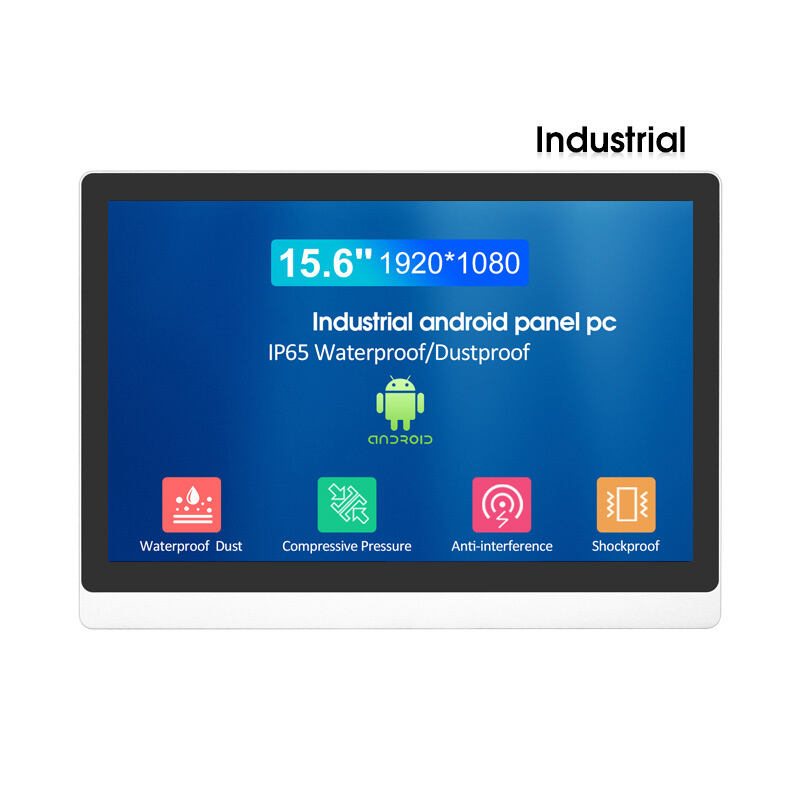
Why Fanless Industrial Panel PC Design Ensures Uninterrupted Smart Factory Operations
Dust, Vibration, and Thermal Challenges in Real-World Factory Environments
Regular computer systems tend to break down about five times more often than their rugged counterparts in factory environments, as shown by the latest 2025 report on automation reliability. Factories are full of constant vibrations, sometimes reaching 2G forces in places like metal stamping facilities. Dust particles floating around can pile up to 12 milligrams per cubic meter right next to those CNC machines, which means internal cooling fans get clogged fast. The temperature differences alone are shocking too, swinging over 60 degrees Celsius from when factories shut down for seasons to when they run hot during summer months. All these harsh conditions explain why roughly seven out of ten unexpected production stoppages happen because equipment just wears out or overheats and slows down.
How Passive Cooling and Sealed Enclosure Design Eliminate Failure Points
Industrial panel PCs that don't need fans get rid of those pesky failure points thanks to their solid state design. No moving parts means there's nothing for dust to stick to and no bearings that can break down when things vibrate. The whole setup just doesn't wear out as easily over time. These machines come with IP66 rated cases that keep dust out even if they're sitting in a sandstorm for an hour straight. They also stand up to powerful water jets, so they work great in areas where cleaning is frequent or dust levels are sky high. For keeping things cool, manufacturers rely on aluminum casings that act like built-in heat sinks. This lets them run reliably from freezing cold at -20 degrees Celsius all the way up to a sweltering 60 degrees without needing any special airflow. Plus, they use industrial strength capacitors and have that protective conformal coating applied, which helps fight off corrosion caused by moisture and protects against damage from constant temperature changes.
Plant operators report 72% fewer unplanned stops after deployment, with component lifespans exceeding 100,000 hours—making fanless industrial panel PCs foundational for continuous smart manufacturing workflows.
All-in-One Integration: How Fanless Industrial Panel PC Systems Reduce Latency and Complexity
Consolidating HMI, Edge Control, and I/O into a Single IP66-Rated Platform
Industrial fanless panel computers bring together several important functions like HMI interfaces, edge control logic, and industrial input/output systems inside one sturdy IP66 rated housing. By combining everything into this single unit, there's no need for extra cables running between separate components which cuts down on communication lag times by somewhere around 40 to 60 percent. The reduced number of actual physical connections makes these systems much less likely to come apart when subjected to constant vibrations from machinery, and factories report installation times dropping nearly three quarters compared to traditional setups. What really matters though is how well these sealed enclosures keep out dust and moisture, since dirty particles getting into control systems causes about a quarter of all automation failures each year according to industry data from 2023.
Real-Time OS Support and Embedded GPU Acceleration for On-Device Analytics
The systems typically operate using deterministic real time OS options like QNX or VxWorks, which allows them to execute commands with microsecond precision needed for those tight control loops in automation applications. With built-in graphics processing units, these devices can handle analytics right at the source. We're talking about things like visual inspections for product quality checks and predictive maintenance algorithms running locally. This cuts down reliance on sending data back to the cloud, slashing response times by almost 92% when speed really counts. They can process 4K footage at 60 frames per second all while drawing less than 25 watts of power, so operators get immediate feedback without waiting for network connections to catch up. The local processing approach actually brings down bandwidth requirements by around 78% compared to setups that depend heavily on cloud services according to research published in the IEEE IoT Journal last year.
Enabling Closed-Loop Automation: Fanless Industrial Panel PC as Intelligent HMI and Edge Controller
OPC UA over TSN Integration for Deterministic, Middleware-Free PLC Communication
When OPC UA is integrated with Time-Sensitive Networking (TSN) right inside those fanless industrial panel computers, it creates much better communication with PLCs. No need for extra middleware layers that just slow things down and create potential problems. What we get instead is a protocol stack that can synchronize data transfers with incredible precision at the microsecond level. This matters a lot for closed loop control systems where machines need to send feedback signals and have them processed almost instantly. According to recent industry reports from 2023, plants that switch to this method see about a 92% drop in communication jitter and save roughly 30% on their network setup expenses. And let's not forget about the hardware itself. These fanless units come sealed with IP66 protection, so they keep working reliably even when exposed to constant vibrations and dust buildup. Traditional cooling methods tend to break down under these conditions, but the sealed design maintains good electrical contacts and keeps those OPC UA data streams flowing without interruption.
Pre-Validated Driver Ecosystem for Major Automation Platforms—Accelerating Deployment
An ecosystem of drivers that have already been validated cuts down on compatibility testing by around 80%, according to the Automation Deployment Benchmark report from 2024. These systems work right out of the box with major PLC platforms like Siemens S7, Rockwell ControlLogix, and Beckhoff TwinCAT. Engineers can now install these plug-and-play setups with all the necessary communication protocols already built in, which means getting everything running takes just days instead of weeks. The design without fans keeps things stable even when temperatures hit 60 degrees Celsius, so there's no slowdown during continuous operations. When paired with IP66 dust and water resistance, this combination of hardware and software gives operators close to perfect uptime at 99.95% for critical tasks ranging from managing recipes and controlling batches to analyzing product quality in real time.
Frequently Asked Questions (FAQ)
What does fanless mean in industrial panel PCs?
A fanless industrial panel PC uses passive cooling methods without any moving parts like fans, which prevents common issues related to dust accumulation and component fatigue due to vibrations.
How does fanless design impact factory operations?
Fanless design contributes to reduced failure points, leading to fewer unplanned stops and increased reliability, which is crucial for maintaining uninterrupted smart factory operations.
What are the benefits of OPC UA over TSN integration?
OPC UA over TSN integration provides deterministic communication without middleware layers, reducing jitter and improving communication speed and reliability, essential for closed-loop automation systems.
Why is IP66 rating important for industrial panel PCs?
IP66 rating ensures the enclosure is dust-tight and protected against powerful water jets, making it suitable for harsh environments where dust and moisture are prevalent.
Table of Contents
- Why Fanless Industrial Panel PC Design Ensures Uninterrupted Smart Factory Operations
- All-in-One Integration: How Fanless Industrial Panel PC Systems Reduce Latency and Complexity
- Enabling Closed-Loop Automation: Fanless Industrial Panel PC as Intelligent HMI and Edge Controller
- Frequently Asked Questions (FAQ)