
Why Glove-Operable Touch Is Essential for Industrial Touch Panel PCs
Operational Reality: Heavy-duty gloves in manufacturing, logistics, and field maintenance
Industrial workers across various sectors rely on specialized gloves for protection against workplace hazards. Metal fabricators need cut-resistant options, chemical plant staff must wear proofed gloves, and electricians depend on insulated versions for their jobs. But there's a big problem here that many companies overlook. Standard touchscreen interfaces just don’t work when hands are gloved up. This becomes particularly frustrating in food processing plants where strict hygiene rules mean workers can’t take off their gloves even to operate control panels. The same issue plagues warehouse workers dealing with subzero temperatures or those operating heavy machinery on offshore platforms. Trying to remove gloves just to press buttons creates serious safety risks and often leads to non-compliance issues during inspections.
The problem gets worse when we look at how often these issues happen. Assembly workers typically interact with their HMI screens anywhere between 20 to 30 times every single hour during normal operations. When fingers fail to register on touchscreens, workers end up tapping again and again, sometimes resorting to risky methods just to get things done. All these small setbacks add up over time, making workers tired faster and reducing overall output. For facilities where staff wear gloves as part of safety protocols, having touchscreens that actually work with gloved hands isn’t just nice to have it's absolutely essential for maintaining both workplace safety standards and operational efficiency in real world manufacturing environments.
Failure Modes of Standard Touchscreens Under Glove Use
Conventional capacitive touchscreens malfunction with gloves due to fundamental physics: insulating materials (rubber, leather, nitrile, etc.) disrupt the conductive field required for touch detection. This manifests in three distinct failure patterns:
- Ignored inputs: Thin latex or nitrile gloves register only ~40% of intended touches (Industrial HMI Studies, 2023)
- Erratic behavior: Thick work gloves induce phantom touches and cursor drift during movement
- Pressure damage: Operators apply excessive force on resistive screens to compensate, accelerating mechanical wear
These flaws drive hazardous adaptations—glove removal in chemical zones, or reliance on styluses that are easily lost in machinery or contaminated in sterile areas. The resulting 18% productivity loss observed in manufacturing operations (Operational Efficiency Report, 2024) confirms that glove incompatibility directly undermines ROI, uptime, and worker safety.
How Modern Industrial Touch Panel PCs Achieve Reliable Glove Operation
Hardware Innovation: Optimized PCAP sensors with enhanced electrode design and multi-frequency scanning
Industrial touch panels now handle glove operation thanks to special PCAP technology designed specifically for this purpose. The way electrodes are laid out lets signals penetrate deeper, so workers can reliably use them even when wearing nitrile gloves, leather ones, and sometimes even thicker insulated gloves around 0.5 to 1.2 mm thick. These panels scan at multiple frequencies to tell the difference between actual touches and all sorts of background interference like vibrations, dampness, or electromagnetic noise, yet they still respond quickly enough for most tasks. Field tests conducted last year showed these improved sensors hit over 95% accuracy rates with regular work gloves on hand. That means no more needing those expensive proprietary gloves or relying on pressure sensitive options that just don’t work as well in practice.
Firmware Intelligence: Adaptive glove detection and noise-resilient touch filtering
Hardware alone is insufficient. AI-driven firmware complements sensor advances by dynamically tuning performance to actual operating conditions. It continuously analyzes:
- Real-time glove material and thickness via touch impedance profiling
- Ambient interference signatures (e.g., variable-frequency EMI from motors or welding)
- Environmental triggers such as humidity spikes (>85% RH), initiating automatic recalibration
Machine learning—based filtering suppresses false triggers from splashes, condensation, or mechanical vibration—while preserving sub-millisecond response latency. This dual-layer approach ensures consistent, intuitive operation where glove removal is prohibited: from corrosive chemical plants to sub-zero cold-storage facilities.
Capacitive vs Resistive Touch in Industrial HMIs: A Performance Comparison for Harsh Environments
When picking industrial touch panel PCs, what really matters isn’t just whether they work at all, but how well they hold up when things get rough out there in the actual working environment. Capacitive screens work by sensing our body's electrical properties, which is why they support those fancy multi-touch moves and react so quickly to inputs. But here’s the catch most people forget about: regular capacitive tech doesn’t work worth a darn when someone is wearing gloves. And let’s face it, gloves are practically required gear across manufacturing floors, warehouse operations, and equipment repair sites where workers handle everything from greasy machinery parts to sharp tools. The inability to operate with gloved hands becomes a serious roadblock for these industries.
Resistive alternatives activate via physical pressure between layered films, granting universal glove compatibility and inherent tolerance for extreme temperatures (−20°C to 65°C) and moisture. However, they lack gesture support, degrade over time due to film fatigue, and demand firmer, more fatiguing touches—especially problematic during extended shifts.
The modern Projected Capacitive (PCAP) industrial touch panels are filling a real need in the market right now. These systems use smart electrode designs along with clever firmware updates to work well even when operators wear gloves, all while keeping their ability to handle multiple touches at once, maintaining good screen clarity, and standing up to years of use. When looking at environments where there’s constant vibration or lots of dust around, some folks still stick with resistive technology because it works in those conditions. But honestly, the fact that resistive screens aren’t as sensitive and don’t support advanced interactions makes them harder to scale up for more complicated Human Machine Interfaces these days.
| Factor | Resistive Touch | Capacitive Touch |
|---|---|---|
| Glove Compatibility | Works with all glove types | Requires advanced PCAP for glove support |
| Multi-Touch Support | Limited (typically single-point) | Full gesture support |
| Environmental Resilience | Superior temperature range (−20°C to 65°C) | Varies by IP rating and hardening |
| Long-Term Durability | Prone to layer degradation over time | Glass surfaces resist scratches |
The optimal choice depends on operational context: resistive suits applications demanding universal glove use and extreme thermal swings; advanced PCAP delivers future-ready interactivity where precision gestures, scalability, and long-term reliability are priorities.
Beyond Touch: Critical Industrial Touch Panel PC Specifications for Real-World Deployment
While glove-operable touch is essential, it represents only one facet of true industrial readiness. Harsh conditions—from caustic chemical exposure to continuous mechanical vibration—can rapidly degrade inadequately hardened devices. Operational resilience rests on three non-negotiable specifications:
Environmental Hardening: IP65/IP67, wide-temperature range (−20°C to 70°C), and EMI resistance
Industrial touch panel PCs must withstand the full spectrum of environmental stressors:
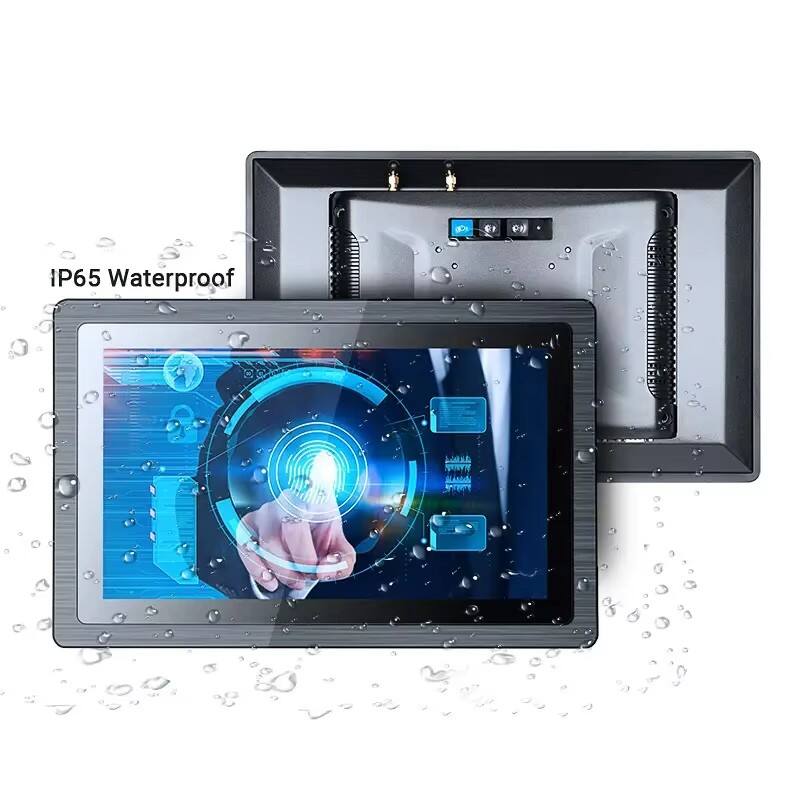
- Ingress Protection: IP65/IP67 sealing prevents dust ingress and resists high-pressure water jets—critical in food processing washdowns, outdoor kiosks, and mining environments.
- Thermal Endurance: A −20°C to 70°C operating range ensures stable function in freezer warehouses, foundries, and desert deployments. Consumer-grade electronics typically fail beyond ±10°C of standard limits.
- EMI Shielding: Certified resistance to 10–30 V/m electromagnetic interference prevents spurious triggers from nearby motors, VFDs, or welding equipment—reducing false alarms by up to 92% in EMI-intensive zones (IEC 61000-4-3 validation data).
Without these core hardening features, even the most responsive glove-compatible touchscreen will succumb to environmental stress within months. Ruggedization isn’t an add-on—it’s the foundational requirement for 24/7 industrial uptime and compliance with ISO 13849 and IEC 62443 safety standards.
FAQ
Why is glove-operable touch important for industrial settings?
In industrial environments, workers frequently wear gloves for safety and hygiene reasons. Standard touchscreens often don't work with gloves, impeding productivity and sometimes creating safety risks. Having glove-compatible touchscreens improves efficiency and compliance.
How do modern industrial touch panels work with gloves?
Modern touch panels use advanced PCAP technology with optimized sensors and AI-driven firmware. They can identify and process inputs from gloved hands, reducing the failure modes common with standard touchscreens.
What are some advantages of capacitive touch over resistive touch for industrial use?
Capacitive touchscreens can support multi-touch gestures and are more responsive, while resistive screens are compatible with all gloves but wear out faster and require more pressure, which can be fatiguing for operators.
Table of Contents
- Why Glove-Operable Touch Is Essential for Industrial Touch Panel PCs
- How Modern Industrial Touch Panel PCs Achieve Reliable Glove Operation
- Capacitive vs Resistive Touch in Industrial HMIs: A Performance Comparison for Harsh Environments
- Beyond Touch: Critical Industrial Touch Panel PC Specifications for Real-World Deployment
- FAQ