
Hardware Integration: Matching Interfaces and Ensuring Signal Integrity
Aligning Physical I/O Interfaces (RS-232/485, USB, Ethernet, CAN, GPIO)
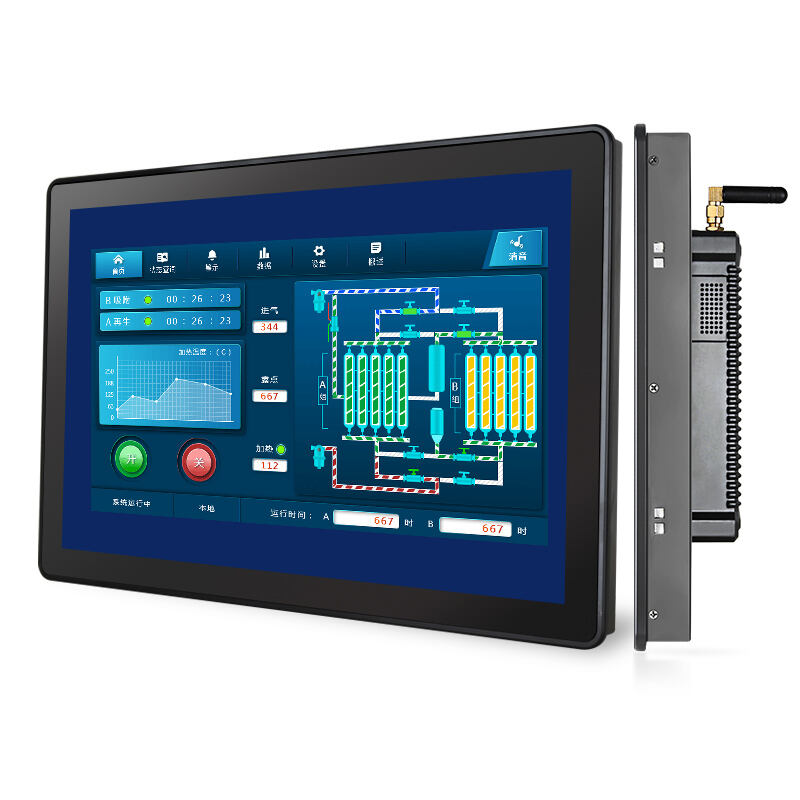
Getting industrial systems to work together smoothly requires making old gear play nice with new stuff. When it comes to embedded computers in manufacturing environments, they need those standard I/O ports we all know and love. Think RS-232 or 485 for connecting serial devices, USB slots for plugging in various gadgets, Ethernet jacks for networking purposes, CAN bus connections for car parts and machine controls, plus GPIO pins for hooking up specialty sensors. Getting these physical interfaces lined up right means no messing around with adapters during setup, which is huge on factory floors. Factories actually lose about 87% of their unexpected downtime when everything fits properly from day one. Taking care of proper cable management and double checking connectors helps avoid wear and tear over time. And don't forget to check those voltage requirements either, like whether something needs 3.3 volts instead of 5 volts for digital signals. All this compatibility stuff saves companies roughly 30% in installation costs versus trying to retrofit older systems later.
Electrical Design for Robust Infrastructure Compatibility and Noise Resilience
Industrial environments generate electromagnetic interference (EMI) from motors, variable-frequency drives, and wireless systems—threatening data integrity. Robust electrical design counters this through three core strategies:
- Impedance matching, especially 50Ω for high-speed or RF-coupled signals, to suppress reflections that degrade signal fidelity
- Differential signaling, as used in RS-485 and CAN, to reject common-mode noise
- Shielded twisted-pair cabling with continuous ground planes, which blocks up to 90% of ambient EMI
Power conditioning circuits help manage those annoying voltage drops and spikes we often see during brownouts. At the same time, transient voltage suppressors act as protection against electrostatic discharge problems. When used together, they maintain signal accuracy above 99.9 percent even when working close to things like arc welders or big transformers. This actually meets the strict surge immunity standards outlined in IEC 61000-4-4. For extra noise resistance, engineers typically separate the analog and digital ground planes on circuit boards. They also keep those printed circuit board traces as short as possible. These simple design choices make a real difference in how well equipment handles electrical interference.
Protocol Integration: Achieving Interoperability Across Industrial Networks
Mapping Common Protocols — Modbus, CANopen, EtherNet/IP, and OPC UA
Getting different types of devices to work together depends largely on smart protocol mapping. When it comes to embedded industrial computers, they need to bridge the gap between various communication standards. Take Modbus for example this is basically a straightforward serial protocol that's been around forever in sensors and PLC applications. Then there's CANopen which provides those real time messages needed for precise motion control systems. EtherNet/IP builds on standard Ethernet infrastructure while still using the Common Industrial Protocol underneath. And let's not forget about OPC UA, a pretty versatile framework that works across platforms with features like semantic modeling, encryption built right in, and detailed information structures. These translation capabilities make all the difference when integrating diverse equipment into modern industrial environments.
Protocol mismatches are responsible for 23% of integration failures in brownfield deployments, according to the Industrial IoT Report 2023. Effective mapping preserves bidirectional data flow—enabling legacy field devices to feed real-time metrics into modern analytics platforms—without requiring wholesale hardware replacement.
OPC UA Adoption Strategy: Bridging Legacy Systems in Brownfield Environments
Deploying OPC UA in existing facilities calls for a pragmatic, phased strategy—not a “rip-and-replace” approach. Begin with protocol gateways that convert legacy signals (e.g., Modbus RTU or Profibus) into secure, semantically enriched OPC UA data streams. Key implementation steps include:
- Conducting an interoperability audit to map controller capabilities, data models, and communication constraints
- Adopting OPC UA Pub/Sub with Time-Sensitive Networking (TSN) for deterministic, low-latency messaging across mixed-vendor networks
- Applying semantic modeling to unify metadata—such as unit definitions, alarm conditions, and device hierarchies—across disparate vendors
This approach reduces integration costs by 40% versus full system upgrades while preserving operational continuity. OPC UA’s vendor-agnostic architecture also future-proofs infrastructure against evolving IIoT standards and cybersecurity mandates.
Software and Platform Integration: Connecting to SCADA, PLC, MES, and ERP
Ensuring Embedded Industrial Computer Compatibility with SCADA and MES/ERP Workflows
Getting operational transparency right means making sure embedded industrial computers work smoothly with enterprise systems like SCADA, MES, and ERP. The thing is, these different platforms need good two-way communication. Think about it: when production floor data comes from PLCs, it has to match up automatically with what's happening in inventory management, scheduling departments, and finance reports. Without this connection, everyone ends up working with outdated or incomplete information. To make all this happen, manufacturers need to get their protocols straight. Something like OPC UA often serves as that common language between systems. At the same time, companies should invest in standardized APIs across their operations. This cuts down on those frustrating data silos where information gets stuck and eliminates the need for workers to manually enter the same data multiple times into different systems.
For brownfield installations, lightweight middleware solutions typically bridge the gap between old school SCADA drivers and newer RESTful or MQTT based APIs. Testing needs to check how well these systems handle maximum data flow rates, particularly important when dealing with urgent processes like quality alerts that need to kick off ERP work orders right away. The system should keep response times under 100 milliseconds from start to finish. Proper implementation of this kind of integration cuts down on reporting mistakes by around 40% according to what most industries report. Plus it adds those necessary security layers with detailed access controls for different roles across both MES and ERP systems where sensitive transactions happen regularly.
IIoT and Edge Integration: Enabling Real-Time Data Flow from Device to Cloud
Architecting Secure, Low-Latency Connectivity Across IIoT, Edge, and Cloud Layers
Industrial operations that need real time performance depend on a well connected system spanning from basic field equipment all the way to cloud based analysis tools. At the heart of this setup sits an embedded industrial computer functioning as what we call an intelligent edge node. When sensor data gets processed right where it's collected, systems can react almost instantly for those critical safety situations like shutting down machinery in emergencies. This local processing also means less waiting around for responses from distant cloud servers. What happens at the edge includes things like filtering out noise, grouping similar data points together, and shrinking file sizes before sending them along. All these steps help cut down on network congestion significantly, maybe even reducing traffic volume by somewhere close to ninety percent in many cases.
Security gets built into each part of the system. TLS encryption keeps data safe as it moves around, multi factor auth locks down who can get into admin areas, and keeping data local means sensitive info stays put where it belongs. The edge stuff handles problems too when networks go down thanks to things like local caching and automatic failover mechanisms that kick in without missing a beat. What we end up with is a setup that gives fast results right where they're needed, but still scales up nicely for those big cloud based ML tasks and looking at trends over time. All this makes for something pretty solid and flexible for today's industrial IoT needs.
FAQ
What are the common physical interfaces used in industrial environments?
Common physical interfaces include RS-232/485 for serial connections, USB slots for gadgets, Ethernet jacks for networking, CAN bus for machine controls, and GPIO pins for sensors.
How does electrical design ensure compatibility and noise resilience in industrial settings?
Robust electrical designs utilize strategies like impedance matching, differential signaling, and shielded twisted-pair cabling to ensure compatibility and block electromagnetic interference.
Why is protocol mapping important in industrial network integration?
Protocol mapping bridges gaps between different communication standards, enabling diverse equipment to work together seamlessly. This prevents integration failures and minimizes hardware replacement needs.
What strategy should be used for adopting OPC UA in existing facilities?
Adopt a phased strategy starting with protocol gateways that convert legacy signals to OPC UA data streams. Key steps include conducting interoperability audits and adopting OPC UA Pub/Sub.
How do embedded industrial computers communicate with SCADA and other enterprise systems?
They use standardized protocols like OPC UA and APIs to ensure two-way communication, syncing floor data with ERP and MES workflows and avoiding data silos.
Table of Contents
- Hardware Integration: Matching Interfaces and Ensuring Signal Integrity
- Protocol Integration: Achieving Interoperability Across Industrial Networks
- Software and Platform Integration: Connecting to SCADA, PLC, MES, and ERP
- IIoT and Edge Integration: Enabling Real-Time Data Flow from Device to Cloud
-
FAQ
- What are the common physical interfaces used in industrial environments?
- How does electrical design ensure compatibility and noise resilience in industrial settings?
- Why is protocol mapping important in industrial network integration?
- What strategy should be used for adopting OPC UA in existing facilities?
- How do embedded industrial computers communicate with SCADA and other enterprise systems?